

Heidi comes to the farm and a little about English Shepherds
We always had a dog on the farm. They weren’t pets as much as they were working members of the farm family. The dogs had a main job, helping with herding cows. Dad tried to train each dog to respond to voice, whistle and hand signals. Most of them were good enough to help out with the cows. One or two were for looks only, in that their presence with the cows made the herd detour, no skills necessary or present. Dad had a couple dogs who were exceptional, Heidi was one of them. She was a great herd dog, and a real character, too.
We had just cattle dogs for a reason, they are smart and they seem to have an intuition about cattle that is lacking in other breeds of dogs. Several of our dogs were English shepherds, like Heidi. Dad much preferred this dog to other cattle working breeds.
An English shepherd is is about the size of a small golden retriever or a big border collie, ranging in weight from about 45 to 65 pounds. The ones we had were tri-colored, similar to a collie. The tri=color, ours anyway had a dark body, white legs and chest and a white nose. A caramel color laid between the dark and white areas. English shepherd coats are medium length and can be straight or wavy with quite attractive “feathers” on their legs. They do not require much grooming; ours were lucky if they got any. Their heads are rounded with a nose that is sort of Labrador-like.
English shepherds are intelligent, versatile and able to work independently. They can be stubborn and willful, blame their intelligence and independence, so they are not every family’s perfect dog. With the right training and owners, they are wonderful. A happy English shepherd will usually be a good natured family dog, tolerant of children and other pets. Like with other working breeds, the English shepherd loves to work and will suffer if it cannot.
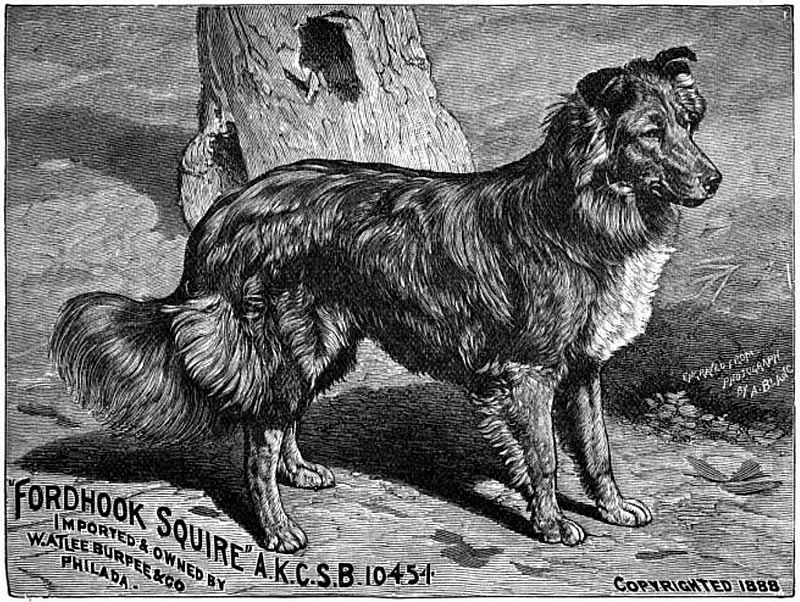
Cattle dog enthusiasts list the English shepherd as one of the types of dogs that were traditionally called farm collies in the United States. The lineage is murky because the dogs were not bred for appearance first, they were bred to be good workers. Experts on the English shepherd breed believe that the dogs originated with English and Scottish collies in the 1700’s. They were bred for farm work, herding all types of farm animals, protecting the family, property or livestock, serving as hunting dogs, and as companions.
The English shepherd is not a recognized breed by the AKC; they are in the list of breeds in the UKC or the United Kennel Club. The breed has plenty of fans now across the US, more than when Heidi was an important part of our home team. English shepherd owners have their dogs in many types of canine sports such as agility. They are still working on farms and also in other jobs like therapy dogs. A link on the home page of this blog will take you an official site for English shepherds for lots more info and photos.
Our family had one working dog at a time, and a couple of pet dogs through the years. The list is rather short. We had Bingo, Max, Heidi, Tyke, Misty, Tippy Ann, Skippy and Buddy. If you have had more than one dog in your life, you can say with certainty that each dog has its own personality. We had dogs from both sides of the doggy-attitude and intellect spectrum. Heidi was our dog after a failed attempt with a registered border collie named Max. Max was OK with the dairy cows but not with the grandchilden. He had to go. Fortunately for Max, his breeder was willing to take him back.
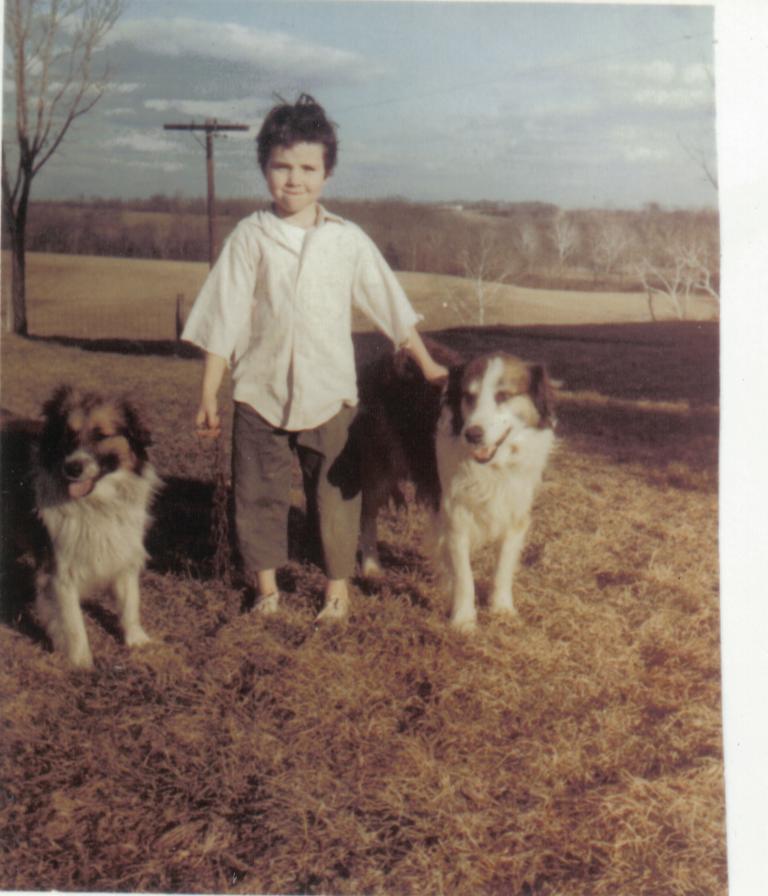
We had an English shepherd before Max, his name was Bingo. Yes, a farmer had a dog and Bingo was his name-o. B-I-N-G-O and so on. He was our other exceptional dog! His herding instincts included children, me specifically. Mom could count on him to help watch over me, keeping me in the back yard and away from the street by blocking my way. Bingo was an outstanding herding dog and had a local reputation for that. He once herded a neighbor’s cattle across a flooded creek, getting them to higher ground before water filled the pasture. But back to Heidi.
Heidi’s birth place is lost in our memories. I believe that she was born on a farm in Kentucky, near Cincinnati, Ohio. At the time English shepherds were not very popular dogs. Other breeds like Australian shepherds were taking over the cattle herding jobs. In the days before the internet, finding a new breeder was difficult. Dad asked other dairy farmers, cattle farmers, and vets to find leads for English shepherd breeders. He looked in the local and metro area newspapers and in farm magazines for breeders that were reasonably close. I was about 13 when Heidi came to us, so I took to her like every kid with a puppy. I like to think I was her second favorite, after Dad, of course.
I was helping Dad in the dairy barn in the evening while Heidi was still a pup. She was with us every milking, learning through osmosis before she was old enough to train to herd. She cried when I would go up in the loft to get hay for the cows; she whined and tried her best to climb the ladder to be with me. She could get up a few steps, so I would help her the rest of the way. She and I got hay for the cows and she loved messing in the loft. It was OK until it wasn’t. One second she was up in the hay and the next she was on the ground not moving. I ran for Dad, terrified and guilt-stricken. She stayed down but Dad saw her chest moving. We carried her to the house and covered her to help against the effects of shock. She survived, of course, and recovered over several days. Dad and I both got our ears chewed by Mom. Dad knew Heidi had been in the loft several times and we both knew better.
Heidi survived her fall without a trip to the vet. Taking a farm dog to the vet was rare and only happened if it was life threatening. Times and attitudes were different then, dogs had their jobs and their place. Our dogs were farm dogs, working dogs.
Farm dogs stayed outside, year round, sleeping in a doghouse summer and winter. The doghouses did not have a bottom. A dog will dig the dirt out in the doghouse, making a cool and dry place to lay in the summer. Straw is put in the house in the winter, fluffy straw is best. The straw is insulation from the ground and fills the sides up to hold in the warmth as much as possible. I guess dog food has always been in the stores, but my parents did not buy it for the farm dogs. The dogs ate table scraps, supplemented with biscuits, gravy and whatever Mom could come up with when the meat scraps were scarce.
By the time Heidi was a year old, her training with the cattle was well underway. The fall from the loft did not have any lasting effect. Dad hoped to have a couple litters from her, she was a good looking dog, smart, and she had a great personality. Dad expected her to be as great as Bingo. He was right, but Heidi was a great dog in a different way.
 Life Stories Told at the Kitchen Table